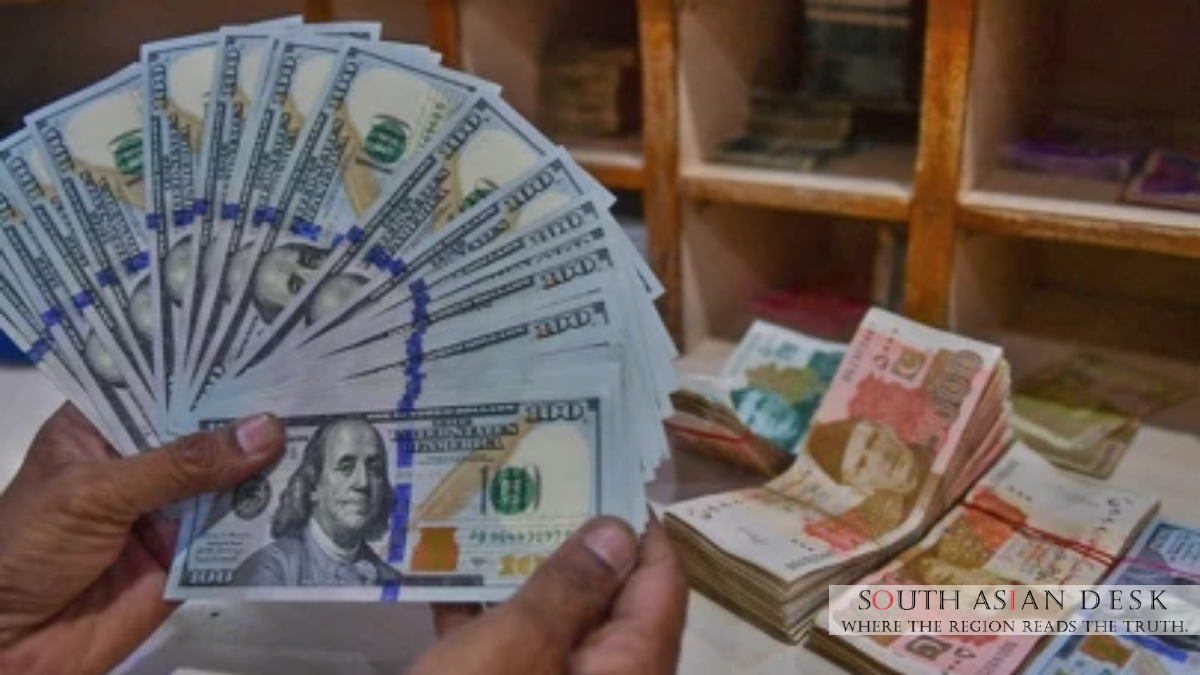
Pakistan seeks $10bn US backstop facility to strengthen its foreign exchange reserves and provide protection against future pressure on the country’s external finances, according to a person familiar with the proposal.
Islamabad has asked the United States to establish a bilateral exchange stabilisation facility with a maturity of up to five years. The proposal was presented to US Treasury Secretary Scott Bessent, the source said.
The arrangement would provide Pakistan with access to dollar liquidity during periods of financial stress, potentially reducing pressure on the Pakistani rupee and improving confidence in the country’s ability to meet external payment obligations.
The request remains under consideration, and no agreement has been announced. The financing structure, interest rate, repayment conditions and timetable for a decision have also not been disclosed.
Pakistan seeks $10bn US backstop as reserve position improves
Pakistan’s foreign exchange reserves have gradually recovered following the severe balance-of-payments crisis that brought the country close to default in 2023.
The government has since secured financing from the International Monetary Fund and received deposits, loans and debt rollovers from bilateral partners, including China, Saudi Arabia and the United Arab Emirates.
Despite that improvement, Pakistan continues to face substantial external financing requirements. The country must regularly secure dollars to repay foreign debt, finance essential imports and maintain an adequate reserve buffer.
A US-backed facility could provide additional reassurance by making dollar liquidity available if Pakistan experiences another sudden financing shortfall or a sharp decline in market confidence.
However, the proposed $10 billion would not necessarily be transferred to Pakistan immediately. Such arrangements can operate as standby facilities that allow funds to be drawn only when agreed conditions are met.
The practical effect on Pakistan foreign exchange reserves would therefore depend on the final structure of the proposed facility and whether the funds could be immediately accessed.
Proposed facility would act as a financial safety net
The requested arrangement is intended to function as a financial backstop rather than a grant or conventional development loan.
A backstop facility provides emergency liquidity when a country faces temporary pressure on its currency or external accounts. It can help a central bank manage periods of market volatility without rapidly depleting its existing reserves.
Pakistan’s proposal reportedly includes a maturity period of up to five years, which could provide a longer planning horizon than the short-term deposits and annual debt rollovers on which the country has frequently relied.
That reliance has created recurring uncertainty because deposits held by friendly countries must often be renewed to prevent a sudden decline in reserves.
A longer-term US Treasury facility could diversify Pakistan’s sources of bilateral financial support and reduce its dependence on a limited number of traditional lenders.
It would not, however, remove the need for Pakistan to address the structural causes of its external financing difficulties.
Pakistan remains vulnerable to external financing shocks
Pakistan’s economy remains exposed to fluctuations in global energy prices, import costs, remittance flows and access to international financing.
The country imports significant quantities of oil, gas, machinery and industrial materials. A rise in global commodity prices can rapidly increase the demand for dollars and place pressure on both reserves and the exchange rate.
Pakistan has also faced repeated shortages of foreign currency when debt repayments and import requirements exceeded available inflows from exports, remittances and investment.
During previous periods of stress, authorities restricted imports and allowed the rupee to weaken sharply. Those measures contributed to higher inflation and disrupted industrial production by limiting access to imported raw materials.
A credible dollar liquidity facility could give the State Bank of Pakistan greater flexibility to respond to temporary shocks without immediately imposing severe administrative restrictions.
The facility would still need to be supported by stronger exports, consistent remittance inflows and sustainable fiscal and monetary policies.
US Treasury approval would require political backing
Any exchange stabilisation arrangement would require approval from the US Treasury and would likely involve a broader assessment of Pakistan’s economic policies and ability to repay the financing.
The United States maintains an Exchange Stabilization Fund that can be used to support foreign currencies and provide loans or guarantees to foreign governments in exceptional circumstances.
Its use is authorised by the US treasury secretary within the applicable legal framework. Such arrangements are uncommon and generally reflect both financial considerations and wider foreign policy priorities.
Pakistan’s request comes amid renewed engagement between Islamabad and Washington on economic, security and diplomatic matters.
Approval of a $10 billion facility would represent a significant expansion of bilateral economic cooperation and could be viewed as a strong signal of US confidence in Pakistan’s financial stability.
No public indication has yet been given that Washington has accepted the proposal.
Facility would complement Pakistan’s IMF programme
The proposed US Treasury facility would operate alongside Pakistan’s existing IMF programme rather than replace it.
Pakistan entered a 37-month Extended Fund Facility with the IMF after completing a shorter emergency programme that helped the country avoid default.
The programme requires the government to improve tax collection, control public spending, reform the energy sector and rebuild foreign exchange reserves. It also includes measures intended to strengthen monetary policy and reduce financial losses at state-owned enterprises.
A US backstop could support those objectives by increasing Pakistan’s access to external liquidity. It would not remove the government’s obligation to continue implementing the reforms agreed with the IMF.
Any financing provided by the United States could also carry separate conditions relating to fiscal discipline, reserve management or the use of the facility.
The IMF would likely assess the arrangement as part of its regular reviews of Pakistan’s financing position and debt sustainability.
Dollar support could strengthen confidence in the rupee
The proposed facility could provide some support to the Pakistani rupee by improving confidence in the country’s ability to meet future dollar requirements.
Currency markets are influenced not only by current reserve levels but also by expectations about whether sufficient financing will remain available over the coming months.
A large standby facility could reassure investors, importers and lenders that Pakistan has access to emergency dollars if external pressure increases.
This could reduce speculative demand for foreign currency and allow the State Bank to manage short-term volatility more effectively.
The impact would depend on the credibility and accessibility of the facility. Markets would distinguish between funds that can be drawn immediately and financing that remains subject to extensive conditions or political approval.
A backstop would also provide only temporary protection if Pakistan’s imports, debt payments and other foreign currency obligations continued to exceed its external earnings.
Proposal could reduce reliance on short-term support
Pakistan has traditionally depended on deposits and rollovers from allied countries to maintain its reserve position during periods of stress.
While these arrangements have prevented more severe financial crises, they often require repeated negotiations and remain subject to the priorities of individual partner governments.
A five-year US facility could offer greater stability if it provides predictable access to dollar financing.
It could also strengthen Pakistan’s negotiating position when seeking financing from international banks, bond investors and other bilateral partners.
The proposal nevertheless remains preliminary. Neither side has announced that formal negotiations have been completed, and there is no confirmation that the full $10 billion request will be approved.
Questions also remain over whether the facility would be provided as a direct loan, a currency arrangement, a guarantee or a combination of financial instruments.
Until those details are settled, the proposed financing should be treated as a request by Pakistan rather than confirmed US support.
If approved, the facility could provide a substantial reserve buffer and reduce the risk of another immediate balance-of-payments crisis. Its longer-term value would depend on whether Pakistan uses the additional financial space to increase exports, attract stable investment and reduce its dependence on recurring external assistance.
Published in SouthAsianDesk, July 22, 2026
Follow SouthAsianDesk on X, Instagram and Facebook for insights on business and current affairs from across South Asia.