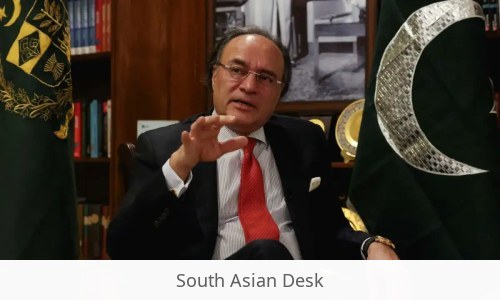
Pakistan trade talks: On July 17, 2026, Pakistan’s Finance Minister Muhammad Aurangzeb will arrive in Washington for three days of discussions with U.S. officials focused on trade, investment, and tariff negotiations. The visit aims to strengthen the bilateral economic partnership between Pakistan and the United States, addressing key challenges and opportunities in their trade relationship.
Pakistan trade talks: Trade Talks Overview
The Finance Minister’s agenda includes meetings with the Office of the United States Trade Representative (USTR) and the US Export-Import Bank. Central to these discussions will be negotiations on tariffs and trade agreements, with an emphasis on improving market access for Pakistani exports and addressing trade imbalances. The talks are expected to explore mechanisms for enhancing bilateral investment flows and resolving outstanding trade disputes.
The USTR, a key player in shaping U.S. trade policy, has historically been involved in bilateral negotiations with Pakistan. These discussions often center on reducing non-tariff barriers, such as regulatory hurdles and customs procedures, which have long hindered Pakistani exports. The US Export-Import Bank, meanwhile, plays a critical role in facilitating trade by providing financing solutions for U.S. exporters and importers. Its involvement in these talks could signal a potential shift in how trade finance is structured between the two nations, particularly for sectors like textiles and agriculture, which are central to Pakistan’s export economy.
Implications for Pakistan’s Economy
The outcomes of these negotiations could have significant implications for Pakistan’s economic landscape. A successful resolution of tariff issues may benefit Pakistani exporters by reducing barriers to U.S. markets, while improved investment frameworks could attract foreign capital to key sectors such as energy and infrastructure. However, the extent of these benefits will depend on the terms of any agreements reached during the Pakistan trade talks.
Pakistan’s textile industry, a major contributor to its export earnings, has faced persistent challenges in accessing U.S. markets due to high tariffs and stringent quality standards. If the Pakistan trade talks result in reduced tariffs or streamlined compliance processes, this sector could see a surge in exports, potentially boosting employment and foreign exchange reserves. Similarly, the energy sector, which has long relied on foreign investment to address chronic shortages, may gain traction if the U.S. agrees to expand its role in financing renewable energy projects or infrastructure upgrades.
The negotiations also come at a time when Pakistan is grappling with a balance-of-payments crisis, exacerbated by high import costs and a reliance on foreign loans. Strengthening trade ties with the U.S. could provide a much-needed avenue for diversifying export markets and reducing dependency on a few key trading partners. However, the success of these talks will hinge on Pakistan’s ability to demonstrate progress in areas such as trade transparency and regulatory reform, which are often cited by U.S. officials as prerequisites for deeper economic cooperation.
Context of U.S.-Pakistan Relations
The visit occurs against a backdrop of evolving U.S.-Pakistan relations, shaped by historical economic partnerships and recent diplomatic efforts to recalibrate trade ties. Past agreements, including the 2012 Strategic Partnership Framework, have sought to deepen economic cooperation, though implementation has faced challenges. This engagement highlights the strategic importance of trade in maintaining broader geopolitical stability in South Asia.
The 2012 Strategic Partnership Framework, which aimed to expand economic and security collaboration between the two nations, included provisions for trade facilitation and investment promotion. However, progress has been uneven, with periodic disputes over trade imbalances and security concerns overshadowing economic cooperation. The current visit by Finance Minister Aurangzeb represents a renewed effort to reinvigorate these ties, particularly as both countries navigate shifting global economic dynamics and regional security challenges.
The U.S. has long viewed Pakistan as a critical partner in South Asia, given its strategic location and role in regional stability. However, trade relations have often been overshadowed by security concerns, including issues related to counterterrorism and regional conflicts. This visit underscores a deliberate effort to refocus attention on economic cooperation as a cornerstone of the bilateral relationship, with trade serving as both an economic and strategic lever.
Follow SouthAsianDesk on X, Instagram and Facebook for insights on business and current affairs from across South Asia.
Sources
- Finance minister to visit Washington for trade, tariff talks with US – dawn.com
- Uzbek deputy PM, business leaders to visit Pakistan on July 20-21 to boost trade ties – dawn.com
Image: i.dawn.com