The ICC Afghanistan investigation has been formally closed as far as alleged crimes by US forces and the Islamic State Khorasan Province (ISIS-K) are concerned, after judges at the International Criminal Court ruled that prosecutors had not shown they could pursue those lines of inquiry effectively. The decision, issued on Thursday, November 12, leaves the court’s work on Afghanistan focused on actions attributed to the Taliban since 2021. The Office of the Prosecutor has since appealed, telling Reuters and the Associated Press that it is challenging the ruling.
What Pre-Trial Chamber II Decided
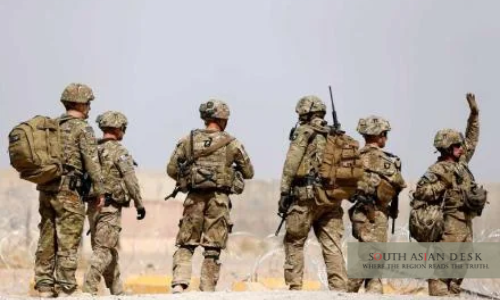
Pre-Trial Chamber II ordered the closure of the original Afghanistan investigation in a decision issued in The Hague. That inquiry had a broad scope, covering alleged crimes in Afghanistan from 2003 onwards and involving former Afghan security forces, the Taliban, US military personnel and agents of the Central Intelligence Agency. The strand concerning US forces had effectively remained dormant since 2021, and the new ruling formally ends it rather than leaving it inactive.
In their reasoning, the judges concluded that the prosecution had failed to demonstrate its ability to carry out any further investigative or prosecutorial activities in the original case. They said that acting on their own initiative was justified in the interests of legal certainty, transparency and the proper administration of justice, and they directed the court’s Registry to close the file. The chamber also noted that the prosecution had submitted only a limited number of arrest warrant applications, all of them relating to the separate proceeding on crimes committed since August 2021.
Why the ICC Afghanistan Investigation Was Split
The closure follows a dispute between judges and prosecutors over how the Afghanistan case should be organised. Earlier this year, the judges ordered the prosecution to divide its work into two separate probes. One concerns alleged crimes committed by the Taliban since 2021 and now proceeds as the Situation in Afghanistan II. The other was the original inquiry, which had also examined alleged war crimes by US troops but had gradually shifted towards ISIS-K.
The judges stressed that closing the original investigation does not prevent the second proceeding from continuing. They also indicated that the prosecution could seek fresh authorisation to investigate ISIS-K if it later becomes able to pursue that inquiry effectively. According to Defense News, arrest warrants against four Taliban leaders remain in force.
The investigation itself has a long history. It was publicly announced in 2007 and formally authorised in March 2020, when the Appeals Chamber granted permission after pre-trial judges had initially refused it.
Washington, Sanctions and the Rome Statute
The ruling arrives against a tense backdrop between the court and the United States. Washington has imposed sanctions on the ICC, citing its opposition both to the Afghanistan inquiry into the conduct of US forces and to arrest warrants issued for Israeli officials.
It is not yet clear whether the closure will ease American concerns. As Reuters noted, the decision does not alter the Rome Statute, the court’s founding treaty, which allows it to prosecute anyone accused of atrocity crimes committed on the territory of a member state. In legal terms, the question of jurisdiction over foreign nationals for conduct in Afghanistan has therefore not been resolved by the ruling, even though the specific inquiry into US forces has been shut.
Taliban Position on the Court
The Taliban government, which refers to itself as the Islamic Emirate, had not issued a fresh statement on the decision at the time of Tolo News’s report. It has previously said that it does not recognise the ICC and that it is not bound by the Rome Statute. Officials have also described the former Afghan government’s accession to the treaty as legally invalid and have characterised the court’s decisions as politically motivated. Deputy spokesperson Hamdullah Fitrat restated that position on February 20, 2025, saying that membership of the court was unnecessary.
What Happens Next
The appeal lodged by the Office of the Prosecutor means that the matter is not yet settled. The prosecution has not publicly detailed its grounds beyond confirming that it has challenged the decision. Until the appeal is resolved, the formal closure stands, and the court’s efforts in Afghanistan remain concentrated on the proceeding concerning the Taliban.
For victims and rights advocates who had hoped the court would examine the conduct of foreign forces, the ruling marks a significant setback. For the United States, it removes a long-standing source of friction in one respect while leaving the wider legal question over the court’s reach unchanged. How the appeal unfolds will determine whether the ICC Afghanistan investigation returns to the conduct of US forces or remains confined to the period since 2021.
Follow SouthAsianDesk on X, Instagram and Facebook for insights on business and current affairs from across South Asia.
Read More: