A fresh FIA departmental inquiry may now be opened against officials allegedly linked to the 2023 Greek boat tragedy, after the Supreme Court on Wednesday cleared the way for the Federal Investigation Agency to restart proceedings. At the same time, the court rejected the agency’s appeal against the reinstatement of 40 dismissed officers, leaving the Federal Service Tribunal’s ruling in place.
What the Supreme Court Decided
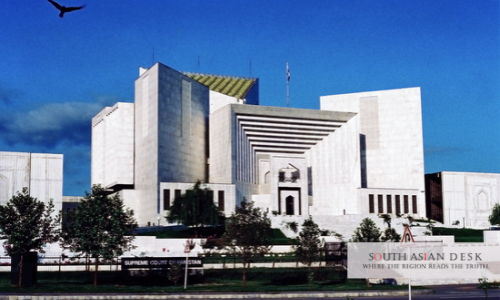
A three-judge bench headed by Justice Muhammad Ali Mazhar heard appeals filed by the Directorate General of the FIA against an order issued by the Federal Service Tribunal on April 14. According to Dawn, the tribunal had reinstated officers whom the agency had penalised and dismissed after the 2023 Greek boat tragedy, on the allegation that they facilitated the human smuggling of vulnerable people.
The Supreme Court upheld the reinstatement but referred the matter back to the FIA. The agency may initiate a fresh inquiry, if it deems it fit, in accordance with the law against officials for whom evidence is on record. The court directed that the officials must first be given an opportunity to be heard.
The FIA’s Arguments in Court
Deputy Attorney General Raja Shafqat Abbasi, appearing for the agency, argued that the tribunal had set aside the dismissal orders on technical and procedural grounds, such as non-compliance with procedure and the lack of an opportunity for cross-examination. He told the court that the officers posted at the time at the Lahore, Karachi and Multan airports had a statutory duty under their job descriptions to scrutinise tickets, passports, visas and the purpose of travel to Libya, which he described as a war-torn country rather than a tourist destination.
According to Dawn’s account, he contended that the officers were expected to ask why more than 286 people were travelling to Libya from different airports, and that there was at least gross omission and negligence amounting to direct facilitation. He argued that this enabled smugglers to move Pakistani citizens to Libya and onward to Europe by sea, leading to the deaths of 155 Pakistanis and damaging the country’s international image.
Abbasi further submitted that even if the original inquiry had procedural flaws, the accused officers were not entitled to a clean chit through reinstatement. At most, he said, the FIA should be given a fresh opportunity to hold a de novo inquiry, with a proper hearing and cross-examination, so that appropriate action could be taken against those found responsible. The court’s order largely reflects that alternative.
Understanding the 2023 Greek Boat Tragedy
The disaster occurred on June 14, 2023, when an overcrowded fishing boat that had left Libya for Italy capsized and sank about 50 miles from the Greek town of Pylos. Witness accounts cited by Reuters at the time suggested that between 400 and 750 people were packed onto the vessel. The initial official toll was 82 dead and 104 survivors, though many more were feared missing, and the FIA said at the time that at least 209 Pakistanis were aboard, based on information from families. Later reporting has put the number of Pakistani victims higher, and the figures cited in court differ from earlier estimates, which reflects how difficult it has been to establish a precise count.
The tragedy prompted a national day of mourning in Pakistan and a government pledge to punish human traffickers. It also led to a rare crackdown on the officials responsible for preventing illegal departures. By early 2025, Al Jazeera reported that almost 50 FIA officials had been dismissed for alleged negligence connected to the Greece and Morocco incidents, and that more than 50 others had been blacklisted from serving at immigration checkpoints or anti-trafficking units, following a government inquiry.
Why Due Process Matters
The Supreme Court’s ruling highlights a principle that frequently arises in disciplinary cases within the civil service. Even where allegations are serious, penalties imposed through an inquiry that does not comply with procedural requirements, including the right to be heard and to test evidence, can be set aside by a tribunal. By sending the case back to the FIA, the court has avoided concluding on guilt or innocence while keeping accountability possible.
The decision does not mean the officers have been cleared of wrongdoing, nor that they have been found guilty. They remain reinstated while the agency decides whether to proceed.
FIA Departmental Inquiry: What Comes Next
The immediate question is whether the FIA will launch a new FIA departmental inquiry and how it will address the procedural weaknesses highlighted by the tribunal. Any fresh proceedings will have to give each officer a hearing and a chance to cross-examine witnesses, and to rely on the evidence already on record. How the agency handles this will be watched closely by families of the victims, who have waited more than three years for a clear account of who failed to stop the journeys that ended off the Greek coast.
Follow SouthAsianDesk on X, Instagram and Facebook for insights on business and current affairs from across South Asia.
Read More: