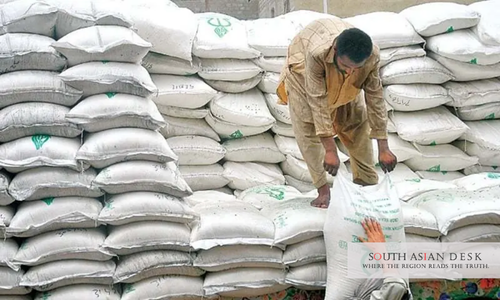
Urea ban in Balochistan restrictions have been conditionally relaxed in 17 additional districts, allowing farmers to resume purchasing the essential agricultural fertiliser under a regulated system. The provincial government announced the decision on Monday evening through an official notification issued by the Agriculture Department, marking a significant development for farming communities that have faced difficulties accessing fertiliser since restrictions were introduced in August.
The decision comes amid growing concerns over the impact of fertiliser restrictions on agricultural activities and farmers’ livelihoods. Although the government has allowed sales to resume, the relaxation is subject to strict conditions intended to prevent the misuse of urea fertiliser for security-related purposes.
According to the notification, the newly permitted districts include Hub, Jaffarabad, Sohbatpur, Usta Muhammad, Jhal Magsi, Dera Bugti, Barkhan, Sibi, Kachhi, Khuzdar, Kharan, Loralai, Qila Saifullah, Quetta, Pishin, Kalat and Panjgur. The latest decision extends the conditional relaxation previously granted to Nasirabad and Lasbela, bringing the number of districts where fertiliser sales have been permitted to 19.
Urea Ban in Balochistan: Why Were Fertiliser Sales Restricted?
The restrictions on urea fertiliser were initially imposed in August following security concerns regarding its potential use in the manufacture of improvised explosive devices (IEDs). Authorities raised concerns that fertiliser could be diverted from agricultural supply chains and exploited by anti-state elements for violent activities.
Urea is widely used in agriculture as a nitrogen-based fertiliser that supports plant growth and improves crop development. Its importance to agricultural production makes uninterrupted access particularly significant for farmers who depend on it to maintain crop yields and productivity.
However, the restrictions created considerable difficulties for farming communities across Balochistan. Farmers in affected districts faced obstacles in purchasing an essential agricultural input, raising concerns about the potential consequences for cultivation and agricultural output. The restrictions also triggered protests in some parts of the province, highlighting the economic pressures experienced by farmers as a result of the limited availability of fertiliser.
The government’s latest decision therefore represents an attempt to address the difficulties faced by the agricultural sector while maintaining the security measures that prompted the original restrictions.
New Conditions for Urea Fertiliser Sales in Balochistan
Despite the relaxation, the provincial government has made it clear that the resumption of fertiliser sales will not mean a return to unrestricted commercial transactions. Dealers will be required to comply with the prescribed standard operating procedures (SOPs) and maintain complete records of all fertiliser sales made to farmers.
The official notification specifically prohibits the sale and purchase of urea fertiliser outside the prescribed protocols. It further clarifies that no parallel system operating contrary to the newly established procedures will be recognised, and any transactions conducted outside the approved framework will be considered illegal.
These requirements are intended to improve accountability within the fertiliser distribution network and enable authorities to monitor the movement of agricultural supplies. Maintaining transaction records will also allow officials to exercise greater oversight over the distribution of urea and identify potential irregularities.
The provincial government has assigned monitoring responsibilities to Agriculture Department officials, deputy commissioners and law enforcement agencies. These authorities will oversee fertiliser stocks and their movement, with any violations required to be reported immediately.
Dealers who fail to comply with the prescribed procedures will face strict administrative action. The notification also warns that violations could result in the cancellation of fertiliser dealership licences, indicating that the government intends to enforce the new conditions through regulatory oversight.
What the Decision Means for Balochistan Farmers
The conditional relaxation could provide considerable relief to farmers who have struggled to obtain fertiliser during the period of restrictions. Urea is an important agricultural input because nitrogen plays a central role in plant development, particularly in the growth of leaves and stems. Its availability can therefore influence agricultural productivity across different cropping systems.
For farming communities in Balochistan, access to fertiliser is particularly important given the economic challenges associated with agricultural production. Restrictions on essential inputs can create additional difficulties for farmers who must manage cultivation costs while ensuring that their crops receive the nutrients necessary for healthy growth.
The expansion of permitted fertiliser sales to 17 additional districts may help restore access to agricultural supplies and reduce some of the pressure created by the earlier restrictions. However, the extent of the relief will depend on how effectively the new distribution arrangements are implemented and whether farmers can access fertiliser through the authorised dealers without unnecessary delays.
The government’s approach also reflects the challenge of balancing agricultural requirements with security considerations. While preventing the diversion of fertiliser for unlawful purposes remains a stated concern, prolonged restrictions on essential agricultural inputs can impose significant costs on legitimate farming activities.
A regulated distribution mechanism could offer a more sustainable approach by allowing farmers to obtain necessary supplies while giving authorities greater oversight over fertiliser transactions.
Balancing Agricultural Needs and Security Concerns
The latest development highlights the difficulties of managing essential agricultural commodities in areas where security concerns influence commercial activity. The initial restrictions were introduced to prevent the potential misuse of fertiliser, but their consequences extended beyond the security sector, affecting farmers and agricultural businesses.
The conditional reopening of fertiliser sales in 17 additional districts suggests that the provincial government is moving towards a more controlled distribution framework rather than maintaining a province-wide prohibition. The requirement for dealers to follow prescribed procedures, maintain transaction records and cooperate with government monitoring is central to this approach.
Nevertheless, effective implementation will be important in determining whether the decision provides meaningful relief to farming communities. Excessive administrative obstacles or inconsistent enforcement could undermine the benefits of the relaxation, particularly for farmers who depend on timely access to fertiliser.
For now, the government’s decision marks an important step towards restoring fertiliser availability across a larger part of Balochistan. The challenge will be to ensure that security safeguards do not unnecessarily disrupt legitimate agricultural activity, allowing farmers to access essential inputs while preventing their diversion for unlawful purposes.
Follow SouthAsianDesk on X, Instagram and Facebook for insights on business and current affairs from across South Asia.
Read More: