The Dhaka bus franchise system formally began on Sunday, as a franchise-based service started on six routes in the capital under the long-delayed bus route rationalisation programme. The launch, held at Manik Mia Avenue in Sher-e-Bangla Nagar, was chaired by Mohammad Mashiur Rahman, executive director of the Dhaka Transport Coordination Authority (DTCA), with Dhaka Metropolitan Police Commissioner Mosleh Uddin Ahmed attending as special guest. Dhaka Tribune reported that services also began on a seventh, circular route.
What changes on the road
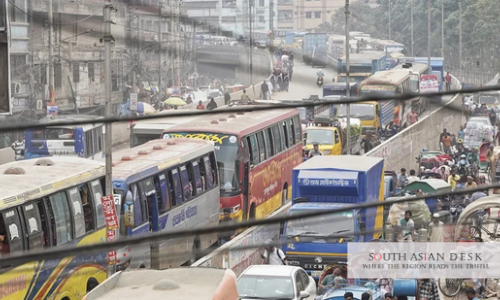
Under the plan, a single company will operate on each route, replacing the competition among rival operators that has long defined the city’s bus network. Commissioner Ahmed said around 18 operators had previously served the six routes, often racing for passengers and contributing to congestion and accidents, according to The Daily Star. Four Star Bus Line has been assigned the Ghatarchar to Kanchpur route, while PNP City Service will run between Ghatarchar and Uttara, and an air-conditioned service is planned between Tongi and Dhakeshwari Temple.
The DTCA’s fleet plan has been reported with slightly different totals. The original plan cited 816 buses, made up of 796 non-air-conditioned and 20 air-conditioned vehicles, while later reports spoke of between 780 and 831 buses operated by six companies. The wider objective is to reduce the 98 bus routes that currently operate to 32 integrated routes, with buses eventually carrying distinct colours, route numbers and digital display plates so that commuters can identify them easily.
A launch without much visible change
The opening day showed how far the system remains from its goal. Dhaka Tribune reported that many of the buses scheduled for the six routes were not on the roads, and that passengers said their travel times were largely unchanged. Commissioner Ahmed said time constraints had prevented the buses from being repainted before the launch. The Business Standard likewise noted disputes over route allocation and bus fitness in the lead-up to the start.
Passengers will largely be boarding familiar vehicles. Dhaka Tribune reported in October that most buses in the first phase would be existing vehicles that had been repaired and repainted, and that the DTCA separately plans to introduce smaller new buses on 25 circular routes connecting to the metro rail network in about two months.
Ticketing and bus stops remain open issues
Several of the structural elements that make a franchise meaningful are still incomplete. The system is meant to include electronic and counter-based ticketing, GPS tracking and designated boarding points. Yet DTCA sources told Dhaka Tribune that bus owners on all but one of the 32 proposed routes had not agreed to electronic ticketing.
A 2024 DTCA inspection also found that 165 of roughly 400 designated bus stops across eight pilot routes had not been implemented, and, without working ticketing, passengers had gradually returned to paying fares on board.
Dhaka currently has about 7,500 buses run by 66 companies on only 98 of its 418 approved routes, according to the DTCA. Authorities want franchise arrangements for all 32 routes finalised within two months and the entire programme completed within six, a timeline set after Prime Minister Tarique Rahman chaired a meeting on 8 October and directed that the work be accelerated.
Dhaka Bus Franchise System: Lessons from earlier attempts
The idea is not new. It was first floated in 2015 by then Dhaka North City Corporation mayor Annisul Huq, and a pilot called Dhaka Nagar Paribahan began on 26 December 2021 with 50 buses between Ghatarchar and Kanchpur. That effort stalled.
Dhrubo Alam, a deputy transport planner at the DTCA, wrote in The Daily Star that private operators did not join, that the service was relaunched on a single route in February 2025 because owners resisted, and that owners were being asked to give up daily cash collections for a franchise with no guaranteed income.
He told Dhaka Tribune that earlier attempts failed partly because decisions were imposed without sufficiently involving bus owners, and that this time the authorities intend to work with operators while conducting joint drives against unauthorised buses and vehicles lacking fitness certificates or route permits.
Whether the latest effort succeeds will depend less on the ceremony than on enforcement. Keeping unauthorised buses off franchise routes, securing owners’ agreement on ticketing and fares, and completing the missing stops will determine whether commuters eventually experience a different service or simply the same buses in new colours.
Follow SouthAsianDesk on X, Instagram and Facebook for insights on business and current affairs from across South Asia.
Read More: